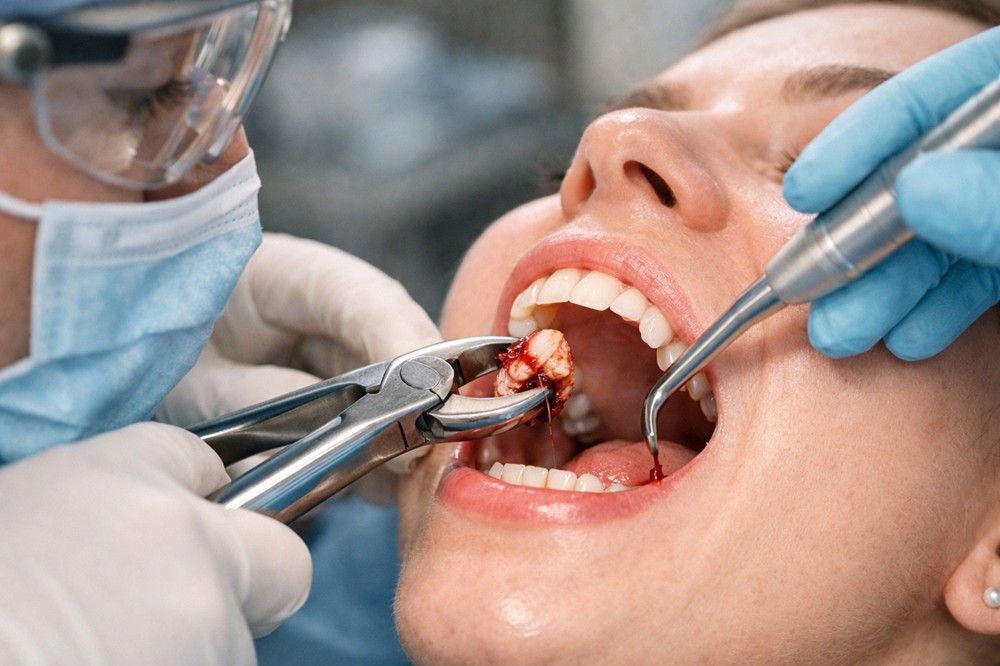
What happens if you need a tooth extraction in Northeast Edmonton? Knowing the steps, risks, and recovery can help you feel ready and calm. Tooth removal, called a dental extraction, is done when a tooth is badly damaged, decayed, infected, or crowded. Visiting a dentist makes sure the procedure is safe, planned carefully, and done comfortably for your teeth.
What is Tooth Removal?
Tooth removal is a dental procedure where a tooth is carefully removed from its socket in the jawbone. This treatment is performed to:
- Treat severe tooth decay or infection.
- Remove impacted teeth, like wisdom teeth.
- Prevent overcrowding in the mouth.
- Prepare for orthodontic treatments or dentures.
When you get your teeth removed properly, it will help with pain relief.
Types of Tooth Extractions
When you know the types of tooth removal, you understand what will happen.
- Simple Extractions: Done for teeth you can see. The dentist numbs the area and gently removes the tooth using basic tools.
- Surgical Extractions: Required for teeth that are broken, impacted, or not fully erupted. This involves small incisions and sometimes the removal of bone around the tooth.
Choosing the right type ensures a safer procedure and better recovery.
Step-by-Step Tooth Removal Procedure
Knowing the steps of tooth removal can make you feel more comfortable.
- Checkup and X-rays: The dentist looks at your tooth and takes X-rays to see its position and health.
- Numbing: The dentist gives local anesthesia to numb the area so the procedure doesn’t hurt.
- Tooth Removal: The dentist gently loosens and takes out the tooth. In some cases, small cuts or a bit of bone may need to be removed.
- Cleaning and Care: The empty socket is cleaned to prevent infection.
- Gauze Placement: Gauze is placed over the area to control bleeding and help a blood clot form.
This dental extraction process usually takes a few minutes for simple extractions, while surgical cases may take longer.
Risks of Tooth Extraction
After a tooth is removed, some problems can happen, but taking care of your mouth helps prevent them:
- Infection: Bacteria can get into the empty socket if it’s not kept clean.
- Dry Socket: If the blood clot doesn’t form or gets dislodged, it can cause pain and slow healing.
- Nerve Issues: Rarely, you might feel temporary numbness or tingling in nearby teeth or lips.
- Bleeding: A little bleeding is normal, but too much needs a dentist’s attention.
- Swelling and Bruising: The area around the tooth may swell temporarily.
Following your dentist’s care instructions helps lower these tooth extraction risks and helps you heal faster.
What to Expect After Tooth Removal
Proper care after extraction ensures smooth healing.
- Pain Relief: Take over-the-counter pain medicine or any prescribed by your dentist near you to reduce discomfort.
- Ice Packs: Put ice on your cheek to help with swelling.
- Soft Foods: Eat soft foods like yogurt, soup, or mashed potatoes for the first few days.
- Cleaning Your Mouth: Rinse gently with salt water, but don’t brush hard near the extraction area.
- Rest: Take it easy and avoid hard activities to stop bleeding and help your mouth heal.
Most people feel better in 1–2 weeks, and the pain usually gets smaller each day.
How Tooth Extractions Benefit Oral Health
Taking out a troublesome tooth may help prevent oral-related issues
- Stops the spread of infection to neighbouring teeth.
- Minimizes crowding while aligning other teeth naturally.
- Relieves pain from decay, infection, and impacted teeth.
- Gets the mouth ready for future dental procedures, such as an implant or bridge.
Extracting an infected tooth can make it easier for you to keep other teeth.
Protect Your Smile with Expert Tooth Care!
Removing a tooth is a safe way to fix damaged, decayed, or problematic teeth and keep your mouth healthy. Knowing the steps, risks, and recovery helps make the process easier and less stressful.
Take the first step to a healthier, pain-free smile. Book an appointment at Zenith Dental Choice today for professional tooth removal in Northeast Edmonton, and keep your smile strong, comfortable, and well cared for.
FAQs
How long does it take to remove a tooth?
A simple tooth removal usually takes 10–20 minutes. More difficult cases, like surgical removals, can take 30 minutes or more, depending on the tooth.
Can all teeth be removed safely?
Most teeth can be safely removed. The dentist checks each case carefully to reduce risks, protect other teeth, and make sure your mouth heals well.
Will tooth removal affect my smile?
If a visible tooth is removed, your dentist may recommend restorative options such as dental implants, bridges, or partial dentures to maintain both the appearance and function of your smile.
Does removing a tooth hurt?
The procedure usually doesn’t hurt because the dentist numbs the area. You may feel a little soreness while healing, but pain can be eased with medicine from your dentist or over-the-counter pain relievers.